Implementing an SEL RTAC-Based Generator Transfer System
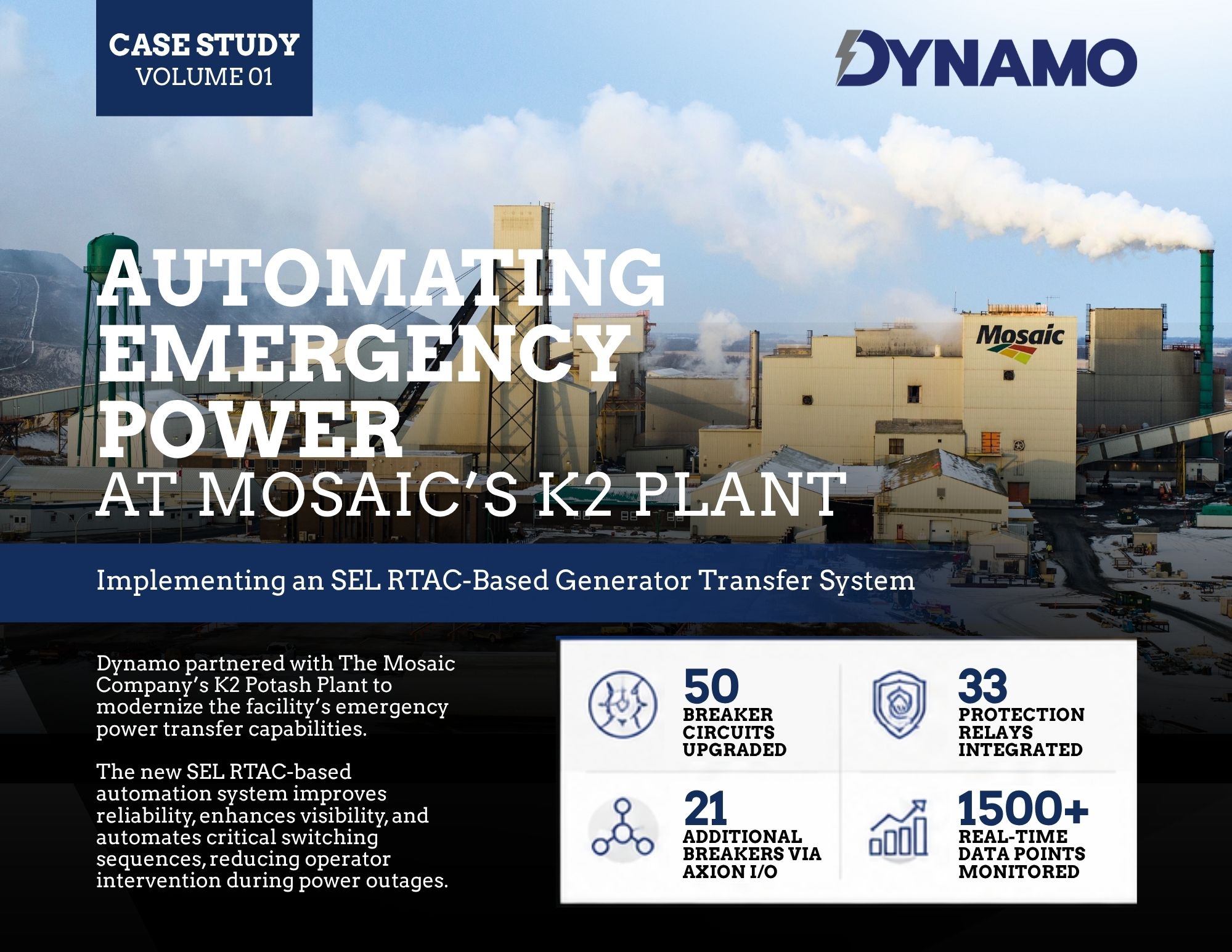
Dynamo partnered with The Mosaic Company's K2 Potash Plant in Saskatchewan to modernize the facility's emergency power transfer capabilities. The project replaced a complex manual transfer process with an SEL RTAC-based automation system designed to automatically coordinate load-shedding and generator transfer sequences following a loss of utility power. The result is a centralized system that improves visibility, automates critical switching sequences, and reduces reliance on manual intervention during emergency power events.
The Challenge
During a loss of utility power, operators were required to manually execute a complex sequence of load-shedding and generator transfer steps. The process involved multiple switching actions under high-stress conditions, increasing the potential for human error and limiting visibility into system status, alarms and event information. The upgrades also had to be implemented while minimizing disruption to ongoing plant operations.
The Solution
Dynamo implemented an SEL RTAC-based automation system that detects utility loss and automatically executes the required load-shedding and generator transfer sequences.
The system coordinates automated transfer actions across 50 breaker control circuits and 33 integrated protection relays.
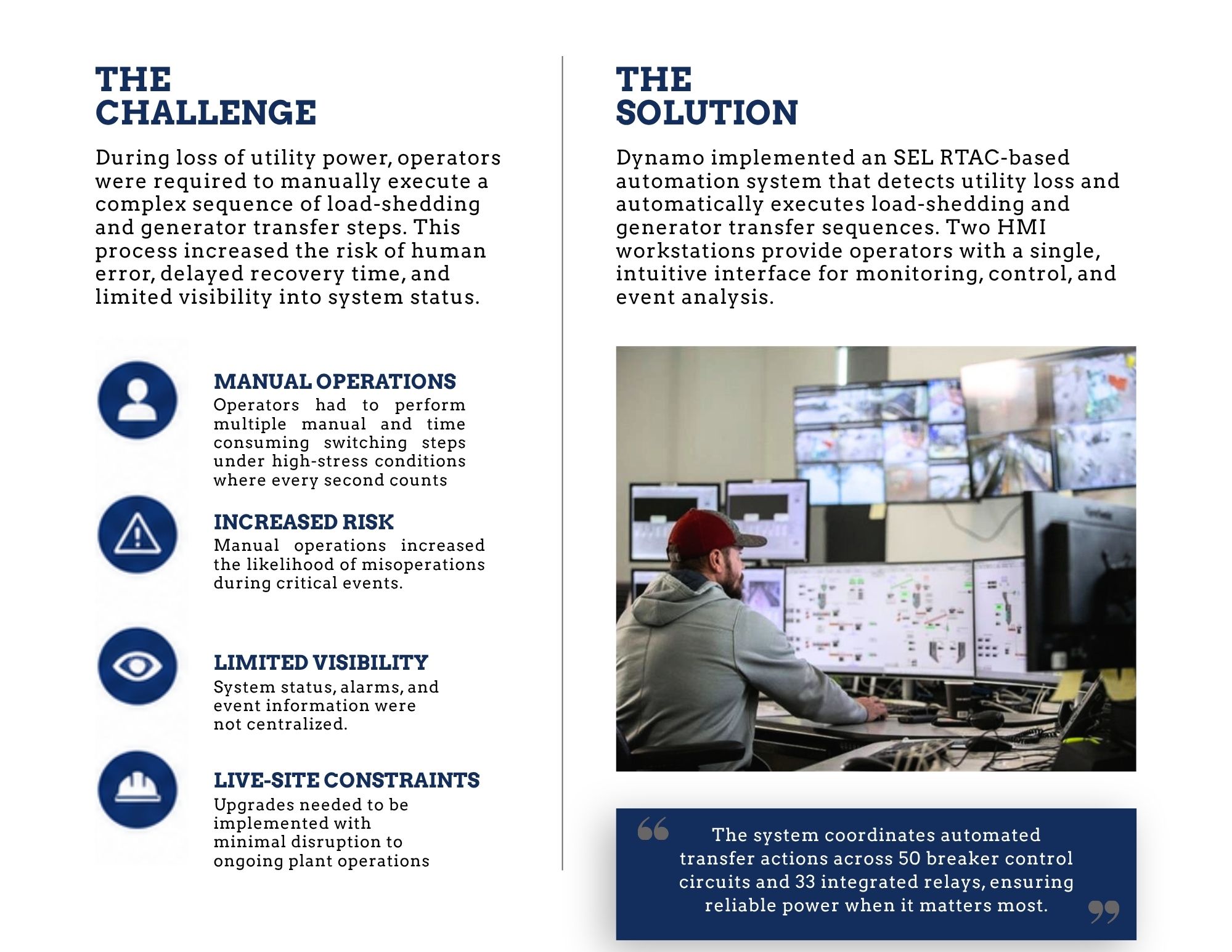
Two HMI workstations provide operators with a centralized interface for monitoring, control and event analysis.
System Highlights
50 breaker control circuits upgraded
33 protection relays integrated
21 additional remote I/O points
Approximately 1,500 real-time data points monitored
2 HMI workstations
SEL RTAC automation platform
138kV / 15kV system voltage
Implementation
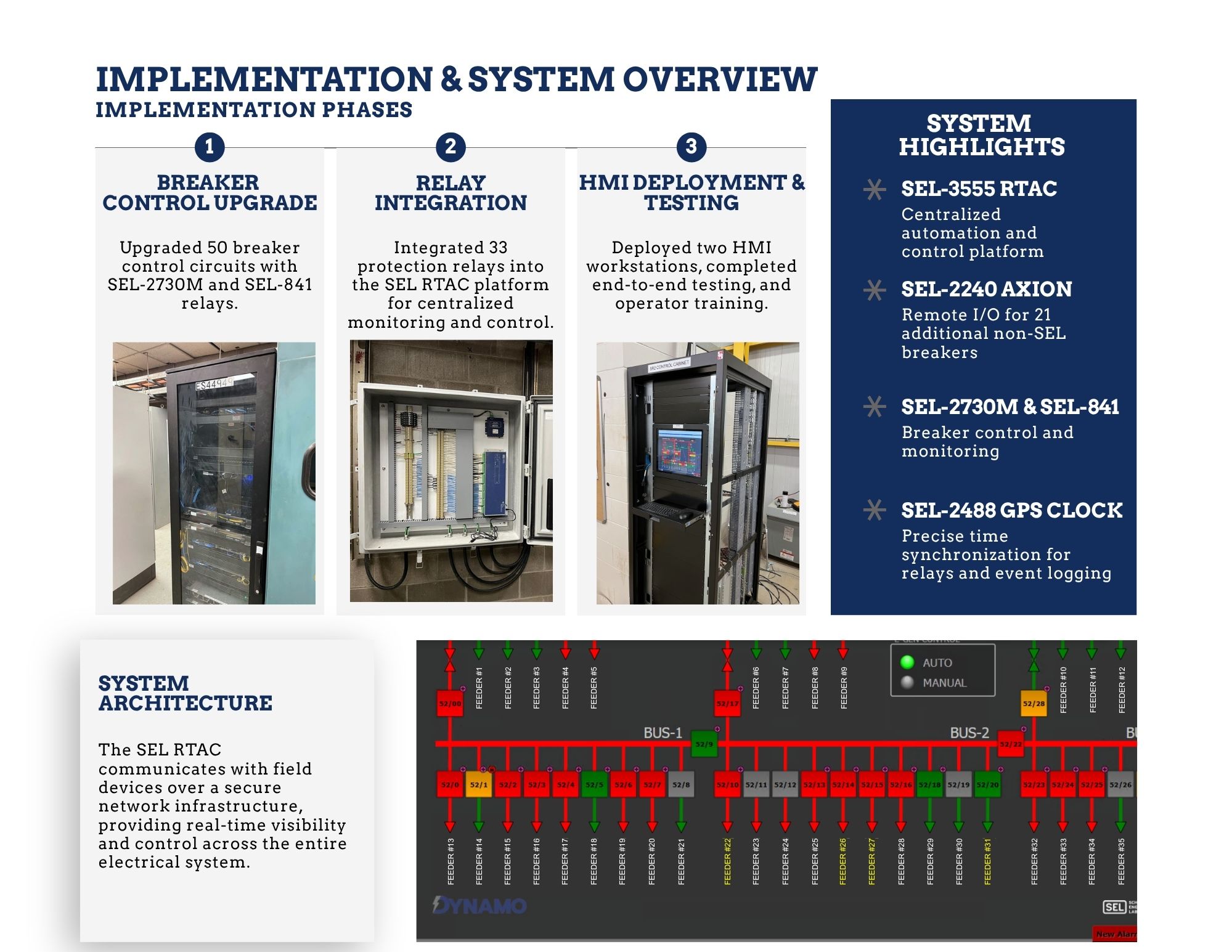
The project integrated protection relays into the SEL RTAC platform for centralized monitoring and control, upgraded breaker control circuits, deployed HMI workstations, and completed end-to-end testing and operator training. The SEL RTAC communicates with field devices through a secure network infrastructure, providing real-time visibility and control across the electrical system.
The Result
The automated system provides:
Automated outage response
Utility loss detection automatically initiates load-shedding and generator transfer sequences.
Enhanced monitoring and control
Operators have real-time visibility into data points, alarms, Sequence of Events information, metering and breaker status.
Reduced reliance on manual intervention
Automated sequencing, interlocks and permission-based controls reduce manual switching during emergency operations.
Scalable architecture
The modular SEL-based design provides a standardized approach for long-term maintainability and future expansion.
Download the Full Case Study
Explore the system architecture, implementation phases and technical details behind the project.